Most of us think of eye colour as simply an inherited characteristic, but our eyes can tell a fascinating story—not only about our ancestry, but also about our health.
While eye colour itself is largely determined by genetics, the eyes are one of the few places in the body where healthcare professionals can directly observe blood vessels and nerves, making them an important window into our overall health.
Approximately 250,000 to 300,000 years ago, the emergence of the latest phase of human evolution, Homo sapiens, began, mostly around equatorial Africa. Every human on Earth had brown eyes. All other eye colours are thought to have developed through genetic mutations as our ancestors left the birthplace of humanity to inhabit different environments and climates.
Although the structure of every human eye is remarkably similar, tiny differences in the amount and distribution of melanin create the wide range of eye colours we see today. Scientists believe these variations developed as human populations adapted to different environments and light conditions over thousands of years. Green eyes are particularly rare because they require a relatively uncommon combination of genetic factors.
Small genetic variations can influence eye colour, resulting in shades of blue, hazel, green or brown. Babies born with lighter-coloured eyes often experience changes during their first two years of life as melanin continues to develop within the iris.
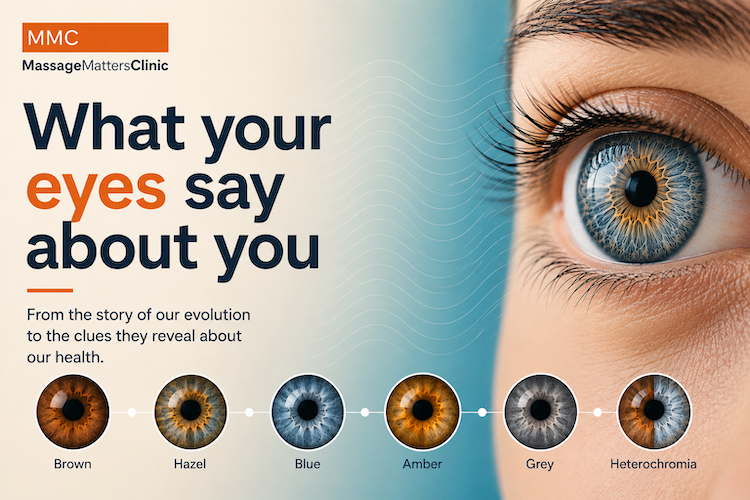
Brown eyes
Brown eyes make up somewhere between 70% and 80% of all eye colours on Earth. They represent the oldest eye colour in human history and contain higher levels of melanin, which helps protect the eyes from bright sunlight.
Hazel eyes
Hazel eyes are produced when melanin is unevenly distributed throughout the iris. As light enters the eye from different angles, hazel eyes can appear to change colour. Around 5% of the world’s population has hazel eyes, with higher prevalence in populations with ancestry from parts of Europe, the Middle East and South America.
Blue eyes
Scientists believe today’s blue eyes originated from a single genetic mutation that occurred thousands of years ago as human populations spread into Northern Europe. Rather than absorbing light through melanin as brown eyes do, blue eyes scatter light in much the same way the sky appears blue.
Some researchers believe blue eyes may have offered advantages in lower-light environments, although this remains an area of ongoing scientific discussion.
Today, approximately 8–10% of the world’s population has blue eyes, making them one of the most recognisable and culturally referenced eye colours.
Amber eyes
Amber eyes are far more common in wolves, birds of prey and big cats than they are in humans. They contain relatively low levels of melanin but lack the light-scattering properties seen in blue and green eyes. In humans they are rare, and are thought to have arisen through ancient genetic variation within small populations.
Grey eyes
Grey eyes are commonly misclassified as blue or green. Like blue eyes, they contain very little melanin, but higher levels of collagen fibres within the iris scatter light differently, creating shades that can appear blue, silver or green depending on lighting conditions.
Around 3% of the global population has grey eyes, with the highest prevalence found in Northern and Eastern Europe.
One blue eye and one brown
Known as heterochromia, this occurs in fewer than 1% of the global population—around six people in every 1,000.
There are three recognised forms:
- Complete heterochromia
One eye is an entirely different colour from the other. - Sectoral (or partial) heterochromia
Only one section of the iris is a different colour. - Central heterochromia
The rarest form, where the inner ring of the iris is a different colour from the outer iris.
What our eyes can tell us about our health
Although eye colour itself doesn’t usually tell us anything about our health, the eyes themselves can.
Routine eye examinations can sometimes detect early signs of conditions such as:
- Diabetes
- High blood pressure
- Raised cholesterol
- Certain neurological conditions
- Autoimmune diseases
- Glaucoma and other eye diseases
This is because the eyes allow healthcare professionals to directly observe tiny blood vessels and nerves without invasive procedures.
It’s one of the reasons regular eye examinations are recommended even if your vision appears perfectly normal.
Conclusion
Although much of the story of eye colour is one of human evolution rather than modern medicine, it serves as a reminder that every part of the body has a story to tell.
The human body is remarkably interconnected. Whether it’s muscles referring pain, the gut influencing inflammation, or the eyes revealing clues about our general health, every system has a role to play. The more we understand these connections, the better equipped we are to look after our health—not just when something goes wrong, but every day.