I’ve recently been reading Ultra-Processed People by Chris van Tulleken, which has got me thinking a lot about food, health and how much of modern life seems to work against us physically.
It’s an interesting book, and one I’ll be writing about in future for sure. Before diving into ultra-processed foods themselves, it feels important to take a step back and look at something many people may have heard of, but don’t fully understand — your gut bacteria, otherwise known as the gut microbiome. But what actually is it, and why does it matter?
What is the gut microbiome?
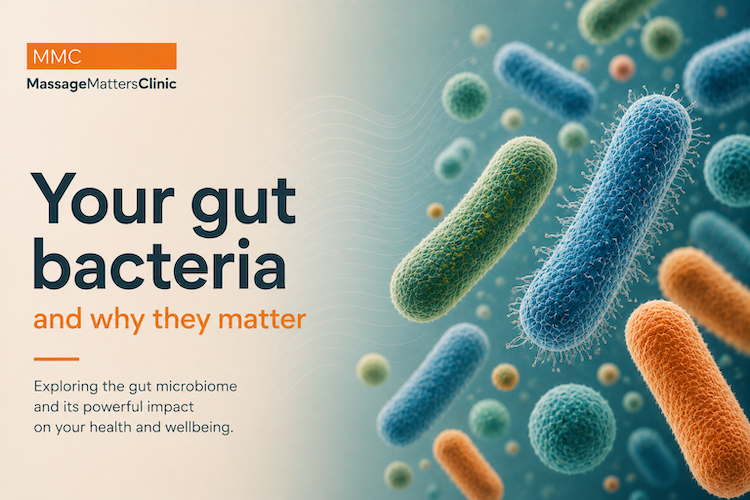
Your gut microbiome is the community of trillions of microorganisms living inside your digestive system — mostly in your large intestine. Bacteria, fungi, viruses, all sorts of microbes. For years the assumption was that bacteria were something to avoid or kill off. We now know a huge number of them are essential to how your body functions. Your gut is basically running its own ecosystem in there, and that ecosystem does a lot more than just digest your lunch.
Balance is the thing that seems to matter most.
Why should we care?
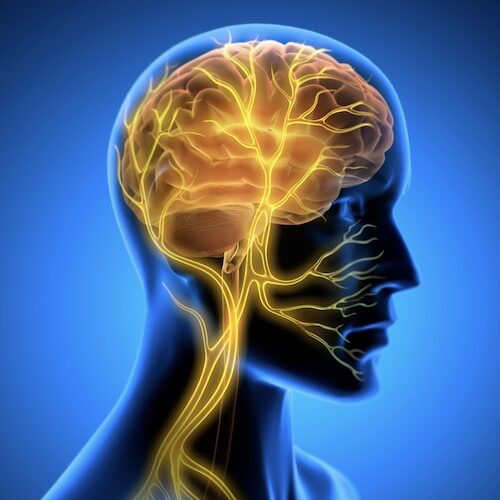
Your gut microbiome has a hand in far more than digestion. It’s tied to immunity (around 70% of your immune system sits in the gut), inflammation, mood via the gut-brain connection, energy levels, sleep quality, and how your body handles blood sugar.
So the state of your gut may genuinely be shaping how you feel on a given day. From a clinic point of view, that overlap is hard to ignore — a lot of what we see week to week (chronic tension, poor recovery, fatigue, stress) sits right alongside this list.
Diversity is key
One of the clearest markers of a healthy gut is diversity — the more varied your gut bacteria, the more resilient the whole system tends to be. It’s a bit like a rainforest versus a monoculture plantation: the rainforest can absorb a shock (a bad season, a disease, a fire) and recover, because there’s so much redundancy built in. Strip it back to a handful of species and the whole thing gets fragile.
Your gut works the same way. Lower microbial diversity has been linked to obesity, autoimmune conditions, digestive issues, and higher inflammation.
What harms the gut?
Modern life isn’t always kind to it. Diets high in ultra-processed foods, low fibre, chronic stress, poor sleep, too much alcohol, not moving enough, and antibiotics (necessary sometimes, but disruptive) are the main culprits.
None of that means these things are always avoidable — but they’re worth being aware of.
How can we support it?
The gut tends to respond well to fairly small changes: more variety in your plant foods, more fibre, fermented foods like yoghurt, kefir or kimchi, cutting back on ultra-processed food where you can, moving regularly, sleeping properly, and managing stress.
One figure that comes up a lot in the research is aiming for around 30 different plant foods a week. It sounds like a lot until you realise herbs, spices, nuts, seeds, fruit, veg and legumes all count toward it — it’s not about eating perfectly, just varying what’s on the plate.
Final thoughts
The more we learn about the gut microbiome, the more it looks like it plays a bigger role in our health than we used to think — digestion, yes, but also inflammation, immunity, mood, energy, recovery. Working in bodywork, I find that genuinely interesting, because it’s another reminder that the body isn’t as compartmentalised as we like to treat it.
Stress affects digestion. Digestion affects inflammation. Inflammation affects pain. Pain affects sleep. And round it goes again.
Understanding the gut won’t fix everything, but it might be one of the better places to start. Next up, I’ll look at one of the biggest challenges to gut health in modern life: ultra-processed food.
A note on sources:
This article was partly inspired by my own reading, including Ultra-Processed People by Chris van Tulleken, Gut by Giulia Enders, and some excellent educational content from ZOE on gut health and the microbiome.