I recently listened to an episode of The Happiness Lab, hosted by psychologist Dr Laurie Santos, featuring DJ DiDonna, a researcher who has spent years looking into the benefits of taking extended breaks from work.
A huge amount of the conversations I have with clients in clinic come back to the same handful of subjects: work, time off, retirement and what comes next. It’s something I think about a lot myself, which is partly why this episode stuck with me.
Most of us are familiar with the idea of working hard now so we can enjoy life later. We save for holidays, look forward to weekends and, above all, picture everything we’ll do once we finally retire. But the podcast raised a question I keep coming back to: what if some of the things we’re saving for later would be better enjoyed while we’re younger, healthier and more physically capable?
The problem with always being busy
For a lot of us, work gives us far more than an income. It provides structure, purpose, friendships and a big part of our identity. The flip side is that it can become so central that everything else slowly drops out of view. We go from one working week to the next, taking the odd holiday to recover before heading back to exactly the same routine, and even a good holiday often isn’t long enough to properly switch off.
DiDonna makes a distinction between a holiday and a sabbatical. A holiday is a short pause in your normal routine, whereas a sabbatical, typically lasting several months, lets you step right outside it. That difference matters more than it first sounds.
Rest shouldn’t have to wait for breaking point
One idea I particularly liked was that we tend to see extended time away from work as something only justified by exceptional circumstances: total exhaustion, a health scare, or a point where carrying on as we are simply isn’t possible. DiDonna compares a sabbatical to preventative dental care. Nobody waits until their teeth are falling out before deciding to look after them, so it’s worth asking why we treat our wellbeing differently.
Of course, several months off isn’t realistic for everyone, financially or practically. But the principle still holds whether you can manage three months, three weeks, or just a few more genuine chances to disconnect. Recovery shouldn’t only be something we earn by running ourselves into the ground.
Who are we outside work?
The conversation also touched on identity, which I found really interesting. When someone asks what you do, you almost certainly answer with your job. Work can become so tied up with our sense of self that we rarely stop to think about who we are without it.
Time away can create space to pick up old interests or find new ones, and it doesn’t need to be anything grand. DiDonna talks about following small curiosities rather than putting pressure on yourself to uncover some life-changing passion: learning a language, spending more time outdoors, making something with your hands, or doing something you’re not particularly good at just because you enjoy it. I like the idea of doing things for no reason other than that, rather than because they’re productive.
The retirement question
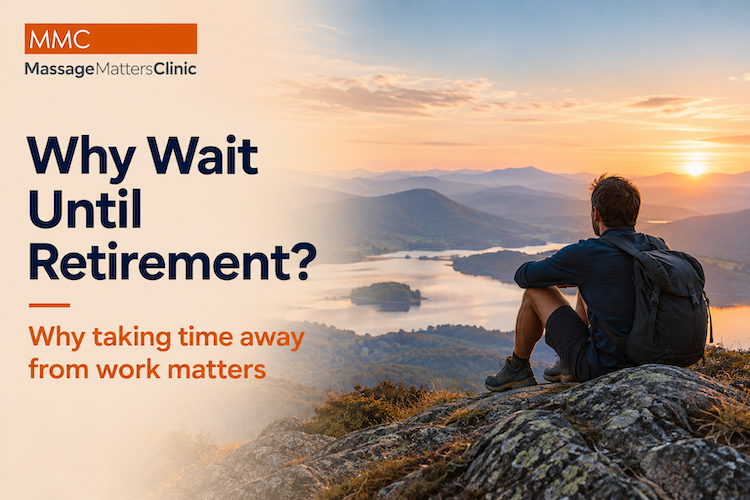
The part that stayed with me most was the challenge to how we think about retirement. Many of us spend decades working towards a time when we’ll finally be free to travel, explore and do the things we love, but none of us knows what our health, circumstances or interests will look like in twenty or thirty years. That’s not an argument against saving or planning, and financial security matters. It’s more a case for enjoying a few of those things along the way, because being able to do something and having the opportunity to do it don’t always arrive at the same time.
Finding a different balance
I don’t think the message is that everyone should quit their job and disappear for six months. For most people that isn’t realistic. What I do think is worth doing is questioning how automatically we organise our lives around work, productivity and the promise of enjoying ourselves later. That might mean taking a bit more time off, protecting your weekends more carefully, or making room for something that has nothing to do with earning money or achieving anything. At the very least, it means treating rest, enjoyment and curiosity as part of a healthy life rather than a distraction from it.
These questions are part of the reason I changed careers. Alongside wanting to help people and a real interest in human health, I wanted more from life: more movement, more connection, more purpose, and something to aim for. At the same time, oddly, I wanted less of some things too, like less time at work, less presenteeism and less of other people’s rules. I suspect that’s why I find these conversations in clinic so interesting, because I’m still working some of it out myself.
At Massage Matters we talk a lot about looking after your body before problems become harder to manage, and I think the same applies to how we organise our lives. We don’t have to wait until we’re exhausted to rest, unhappy to make changes, or retired to start enjoying the things that matter to us. Looking after our future selves can mean making a bit more room for living in the present.
Further listening
This article was inspired by The Life-Changing Power of a Sabbatical, an episode of The Happiness Lab with Dr Laurie Santos, featuring DJ DiDonna, a researcher and co-founder of The Sabbatical Project.
I’d highly recommend listening to the original conversation, which goes into the research, personal experiences and practical challenges of taking extended breaks from work.